
Let’s start with a confession: the Cloud has gotten a little cold.
Not the servers. Those are running hotter than ever, now that every company with a GPU budget has decided it’s an AI company. We mean the vibe. Somewhere between the latest hyperscaler price hike and the fortieth chatbot that can’t find your invoice, the internet started to feel like it was being run by nobody in particular.
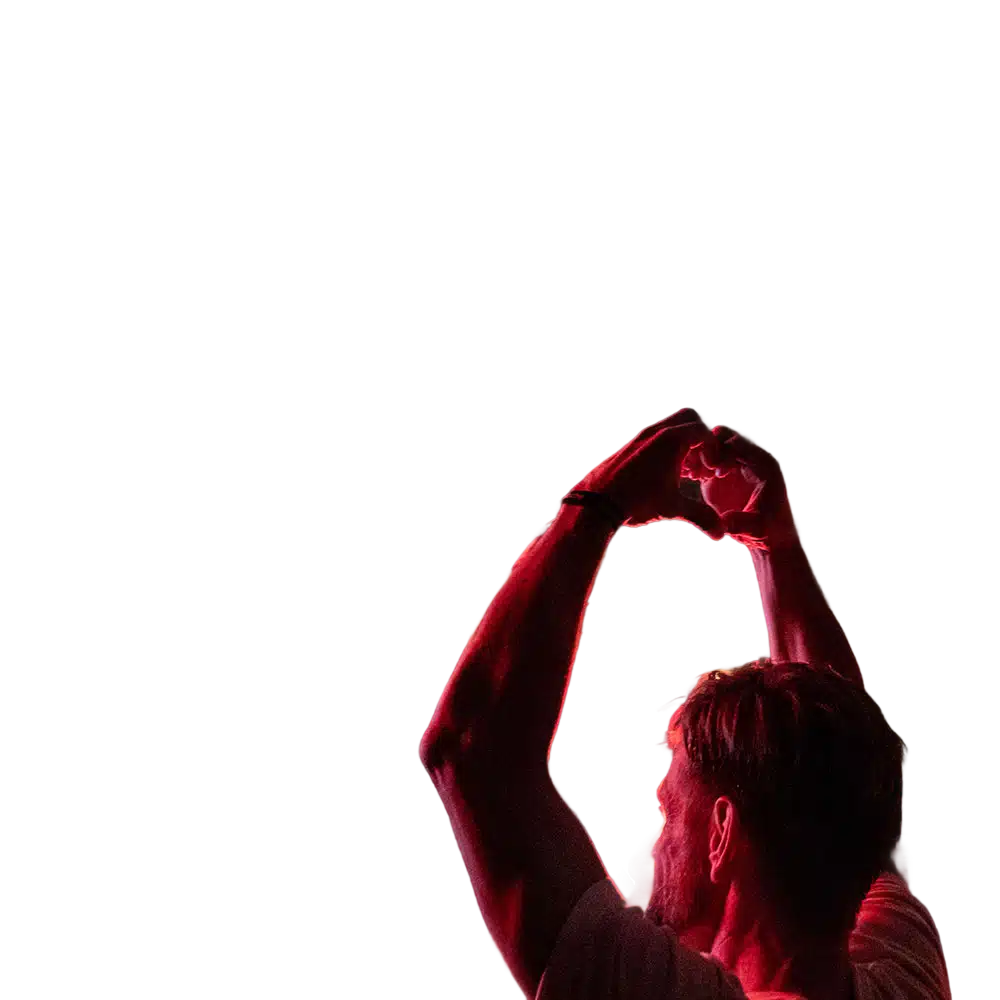
That’s why the theme for CloudFest Global 2027 is The Heart of the Cloud. AI, automation, and centralization keep pushing infrastructure further out of sight, and the further it goes, the easier it is to forget that someone, somewhere, is still responsible for it. When the model hallucinates, the region goes dark, or the compliance deadline lands on a Friday, “the system decided” is not an answer your customers want to hear. What keeps this industry competitive isn’t only scale. It’s the stubbornly human stuff: trust, responsiveness, adaptability, and judgment.
So this year, every session, track, and hallway conversation/heated discussion/argument comes back to one slightly uncomfortable question: where’s the human in this system? It’s a question for hosters and CSPs deciding what to automate, for enterprise IT teams deciding whom to trust with their data, for MSPs and agencies deciding what they’re really selling when AI can build the website. The answer isn’t to unplug the robots. It’s to build resilient, people-centered systems where the machines do the heavy lifting and humans stay accountable for what matters. Or, to borrow our own tagline, because we’re rather proud of it: The internet needs more than scale. It needs a heartbeat.
Registration is already open, so you might as well make it official: join us March 15–18, 2027, at Europa-Park, Germany. Same rollercoasters, better questions.
The storyline, not the sampler platter
Most conference agendas read like a buffet: a bit of everything, nothing connected, and you leave vaguely full and slightly regretful. This year we’re telling one story, and every flagship session connects to the main theme and drives it forward. You will leave with a thousand new ideas, plus one very big idea that’s well-developed.
We start with people. What balance of human talent and AI leverage actually works, beyond what looks good in a board deck? And what if AI were used to upskill workers into higher-value roles rather than simply cutting headcount? Some executives will find that genuinely radical. Bold. We know.
Then we zoom out to nations, and how some are treating AI literacy as national strategy while the rest of us are still arguing about prompt engineering on LinkedIn.
Then the stakes go up. We’ll look at remote robotic surgery, the ultimate uptime test, where a dropped connection is not a support ticket. We’ll take on the Cloud’s role in the next arms race, which is exactly as light as it sounds. And we’ll move past performative safety talk toward real accountability.
We’ll also tackle a simple, unsettling premise: if it’s smart, it’s vulnerable. AI now runs physical infrastructure, not just software, so cybersecurity has quietly become a societal issue. And we’ll make the case that privacy isn’t a feature you bolt on in Q3. It’s the product.
We’ll also revisit internet history through the roads not taken. And we’ll close the loop with something live and interactive (music may be involved, no spoilers yet), because nothing proves the value of human improvisation like humans improvising.
Five tracks for people who want the numbers
Themes are lovely. Business outcomes are even more beautiful. That’s why this storyline runs alongside five tactical tracks:
- Executing AI: Profitable AI models, compute economics, and why spinning hard drives are apparently cool again
- Build a Healthy Stack: Hypervisor repatriation, vibe-coding vs. the CMS, and the single- vs. multi-vendor debate
- Superhuman Cybersecurity: Machine-speed attack and defense, plus the social engineering that still works on actual humans
- Achieve Operational Fitness: AI vs. human support staffing with real costs, and the power, storage and cooling crunch
- Mastering Compliance and Data Sovereignty: Your NIS2/DORA/AI Act/CRA cheat sheet, and compliance as a revenue line rather than a migraine
Meanwhile, at the Open Web Summit
CloudFest Global kicks off on Monday, March 15, with the CloudFest Open Web Summit, aka The Heart of the Open Web. It keeps the same WordPress roots under a bigger tent. The Summit now welcomes the whole open web: WordPress at the core, alongside Drupal, Joomla, TYPO3 and web-native platforms like Wix and Squarespace. It’s also open to everyone building businesses on top of them, including hosters, CSPs, MSPs, SaaS companies, product teams and, above all, web agencies (yes, we’re looking at you). Think of it as the place where the open web’s builders and its businesses finally meet face to face. Expect two stages, extra space for breakouts, business roundtables, and Speed Networking. Last year you told us the hallway conversations were the best part, and we took it seriously. Personally, even. Already have yourCloudFest Community, Vendor or VIP pass? Then the Open Web Summit Pass is yours for free: just claim the add-on through your CloudFest account. The program and speakers are on their way, so stay tuned.
So, about that heartbeat
The Cloud doesn’t need another conference telling it to scale faster. It needs a few days where the people who run it get together, compare notes, argue productively, and remember why they got into this in the first place. Ideally near—or on—a rollercoaster.
That’s CloudFest Global 2027. Registration is open.